

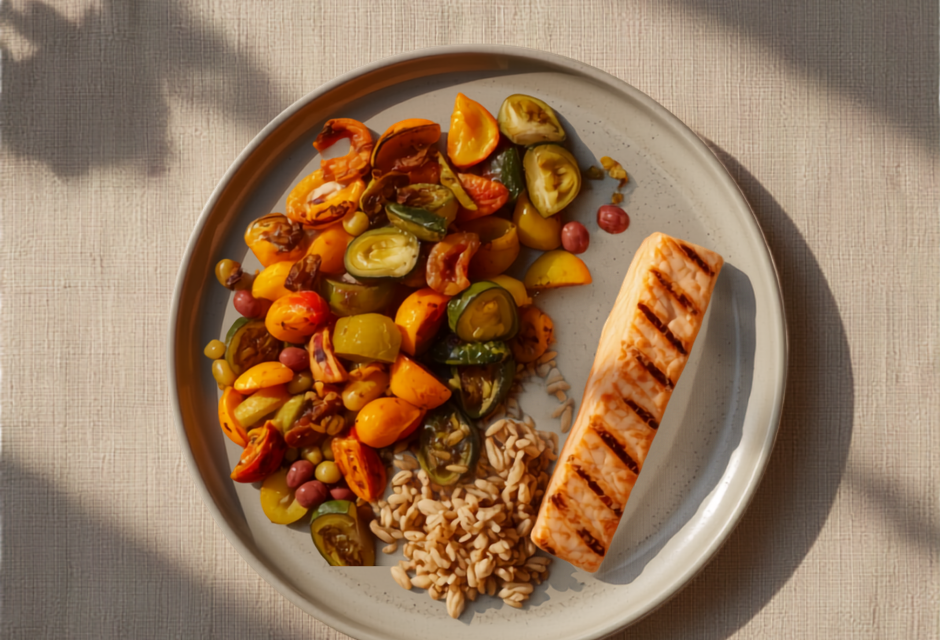
The flexitarian diet is a plant-forward pattern with an escape hatch: eat mostly vegetarian, but allow meat, fish, or dairy in moderation when it makes sense socially or nutritionally. It’s less a strict rulebook and more a direction to lean in.
How It Works
Most days center on vegetables, fruit, legumes, whole grains, and plant protein, with meat treated as an occasional ingredient rather than the anchor of every meal. Because there’s no hard ban on any food group, it avoids the all-or-nothing thinking that causes many stricter diets to fail.
Benefits
- Lower cardiovascular disease risk factors compared to regular omnivores, largely from reduced intake of red and processed meat.
- Body weight is often easier to manage because plant foods tend to be less calorie-dense for the same amount of food, which naturally reduces total calorie intake.
- Occasional meat, fish, or dairy makes it easier to hit iron, zinc, omega-3, and vitamin B12 targets without supplements, unlike a fully plant-based approach.
- The flexibility makes it one of the easier diets to sustain long-term, since there’s no need to turn down food at a family dinner or work event.
Risks and Who Should Be Cautious
- Because there’s no strict rule, results depend heavily on how “flexible” someone actually is — it’s possible to drift back toward a standard diet without noticing.
- People new to plant-based cooking may need to learn a few legume and whole-grain recipes to avoid falling back on refined carbs when meat is skipped.
- Not a structured weight-loss plan on its own; portion size and total calories still matter.
A Sample Day
Greek yogurt with fruit and granola for breakfast; a black bean and vegetable burrito bowl for lunch; a vegetable stir-fry with tofu most nights, with a grilled chicken or fish dinner once or twice a week; nuts or fruit for snacks.
Bottom Line
Flexitarian eating is a realistic middle ground for people who want the health benefits of plant-forward eating without giving up meat entirely. The lack of hard rules is both its biggest strength and its biggest risk — it only works if the flexibility doesn’t quietly become an excuse.
This article is for general information only and is not a substitute for personalized medical advice. Talk to your doctor or a registered dietitian if you have specific health goals in mind.




Recent Comments