

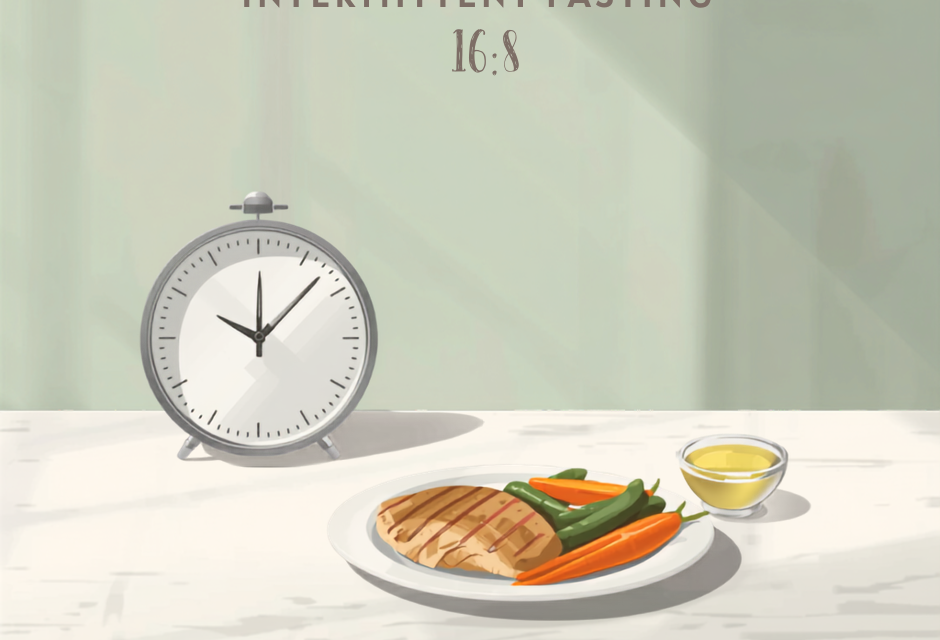
16:8 intermittent fasting is the version most people picture when they hear “fasting for weight loss”: eat during an 8-hour window each day, fast for the remaining 16. No foods are off-limits — timing is the only variable that changes.
How It Works
Compressing eating into a shorter window tends to naturally lower total calorie intake, since there are fewer opportunities to snack and late-night eating is off the table. It also gives insulin levels more time to stay low between meals, which may improve insulin sensitivity over time.
Benefits
- The easiest fasting method to stick with: 16:8 has a roughly 78% one-year adherence rate, well above stricter fasting protocols, because it doesn’t require calorie counting during the eating window.
- Research following people for a full year found that both early and late time-restricted eating groups kept off significantly more weight than people who ate across 12+ hours a day.
- Simple to combine with almost any eating style, from Mediterranean to low-carb, since it’s a schedule, not a food list.
Risks and Who Should Be Cautious
- It’s possible to undo the benefit by overeating or leaning on ultra-processed food during the eating window — the schedule doesn’t guarantee a calorie deficit on its own.
- Not recommended for people with a history of eating disorders, and pregnant or breastfeeding people should skip fasting protocols entirely.
- People on medication for diabetes or blood pressure need medical guidance before fasting, since timing of meals affects dosing.
- Some people experience irritability or difficulty concentrating during the fasting window, especially in the first two weeks.
Getting Started
Pick an eating window that fits your life — noon to 8pm works well for people who skip breakfast anyway. Start with a 12-hour fast and shrink the window gradually over one to two weeks rather than jumping straight to 16 hours. Black coffee, tea, and water are fine during the fast; they don’t break it.
Bottom Line
16:8 is less a diet than a structure, which is exactly why it sticks for so many people. Consistency matters more than the exact hours, and what happens during the eating window still decides the outcome.
This article is for general information only and is not a substitute for personalized medical advice. Talk to your doctor before starting intermittent fasting, particularly if you take medication or have a medical condition.






Recent Comments