

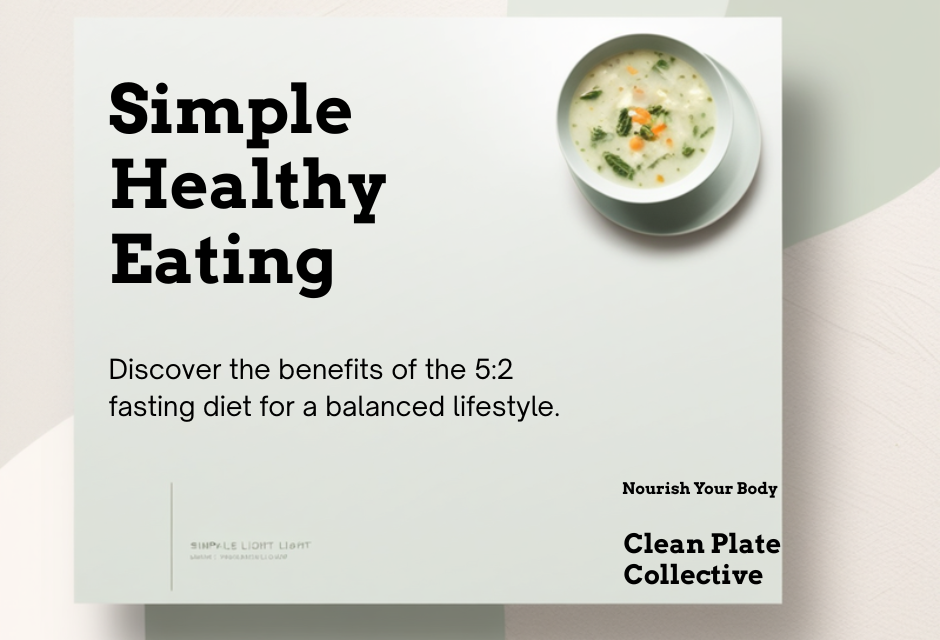
The 5:2 diet takes the opposite approach to 16:8: instead of changing your eating window every day, you eat normally five days a week and cut calories to roughly 500–600 on two non-consecutive days.
How It Works
On fasting days, most people spread that 500–600 calorie budget across one or two small meals — think a vegetable soup and a portion of protein, or a couple of egg-based meals. The other five days have no formal calorie target, though the diet works best when those days stay reasonably normal rather than becoming a reward binge.
Benefits
- A 2026 pilot study on an enhanced 5:2 protocol found participants lost an average of 9% of body weight, compared to 5.7% for a matched daily-calorie-restriction group, with 86% of participants losing more than 5% of body weight.
- Only two days a week require real discipline, which makes it appealing to people who find daily restriction exhausting.
- No foods are banned, so social eating on the other five days stays simple.
Risks and Who Should Be Cautious
- One-year adherence sits around 65%, lower than 16:8, because fasting days can feel harder to push through than a daily shortened window.
- Fasting days can trigger low blood sugar symptoms — dizziness, irritability, poor concentration — particularly for people with diabetes, who should not attempt 5:2 without medical supervision.
- Not suitable during pregnancy or breastfeeding, or for anyone with a history of disordered eating.
- It’s easy to overcompensate on the five normal days and cancel out the deficit from fasting days.
A Sample Fasting Day
Breakfast: black coffee or tea. Lunch: a bowl of vegetable soup (around 200 calories). Dinner: grilled fish with a large portion of steamed greens (around 300 calories). Water throughout the day helps manage hunger.
Bottom Line
5:2 suits people who’d rather go hard two days a week than manage a daily window. The research on it is genuinely encouraging, but the two fasting days need real planning — winging it tends to produce the worst experience of the diet without the benefit.
This article is for general information only and is not a substitute for personalized medical advice. Talk to your doctor before starting the 5:2 diet, especially if you have diabetes or another condition affecting blood sugar.






Recent Comments