

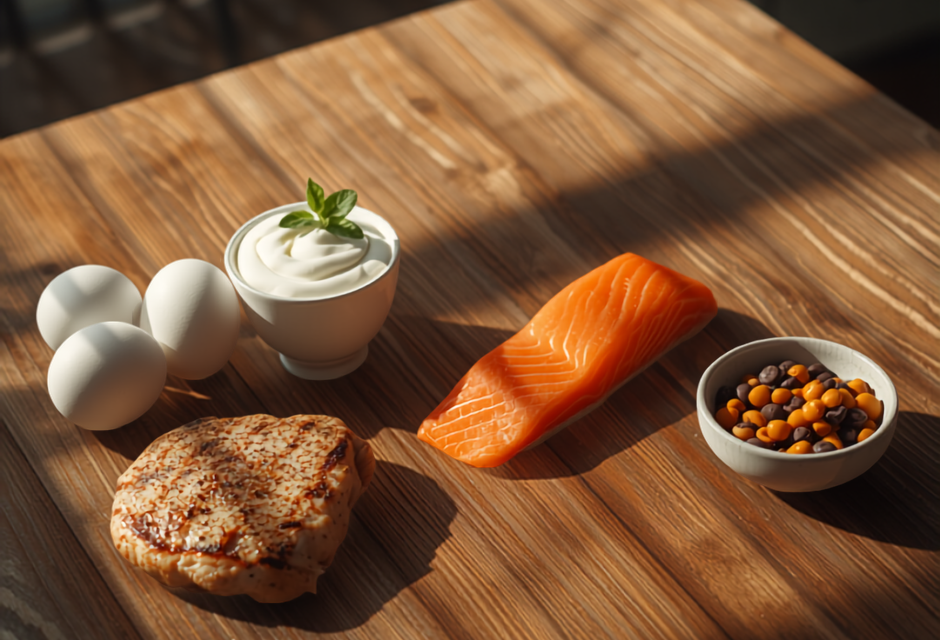
High-protein eating isn’t a diet in the traditional sense — it’s a shift in macronutrient ratio that can be layered onto almost any eating pattern, from Mediterranean to keto. The common thread is pushing protein intake well above the standard baseline, often to 25–35% of total calories.
How It Works
Protein is the most satiating macronutrient gram for gram, partly because digesting it triggers the release of hormones that suppress appetite. It also has a higher thermic effect than carbs or fat, meaning the body burns more calories digesting it. During a calorie deficit, higher protein intake helps preserve lean muscle mass that would otherwise be lost alongside fat.
Benefits
- Reduced hunger and lower spontaneous calorie intake when protein is increased, which is the main mechanism behind most high-protein weight-loss results.
- Better preservation of muscle mass during weight loss compared to lower-protein calorie-matched diets, which matters for long-term metabolic rate.
- Works alongside almost any other diet on this list — it’s a lever that can be adjusted rather than a competing framework.
Risks and Who Should Be Cautious
- The research is mixed on whether protein alone drives extra weight loss independent of calorie deficit — some reviews find no significant effect once total calories are controlled for.
- People with existing kidney disease need medical guidance before significantly increasing protein intake, since the kidneys process protein byproducts.
- Leaning too heavily on processed protein bars, shakes, and red or processed meat to hit protein targets can undercut the fiber and micronutrient benefits of other diets.
- High-protein eating can be filling to the point of accidentally under-eating carbohydrate needed for intense exercise performance.
A Sample Day
Greek yogurt with protein powder and berries for breakfast; a chicken and quinoa bowl with vegetables for lunch; salmon with lentils and greens for dinner; cottage cheese or a hard-boiled egg as a snack. Whole food protein sources — eggs, poultry, fish, legumes, dairy — do more nutritional work than powders and bars.
Bottom Line
Protein is more useful as an add-on than a standalone diet: it improves satiety and helps protect muscle during weight loss, but it works within a calorie deficit rather than replacing the need for one. Pair it with a food pattern you already like rather than treating it as a diet on its own.
This article is for general information only and is not a substitute for personalized medical advice. Talk to your doctor or a registered dietitian before significantly increasing your protein intake, especially if you have kidney disease.




Recent Comments